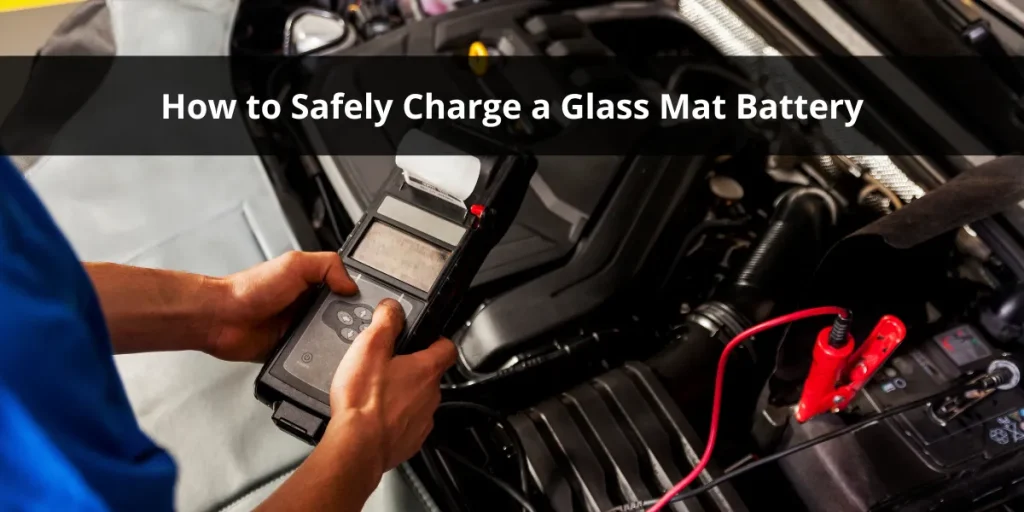
The automotive and industrial battery landscape has evolved significantly over the past decade, with Absorbent Glass Mat (AGM) technology emerging as a superior alternative to traditional flooded lead-acid batteries. If you own a vehicle equipped with start-stop technology, a high-performance car, a boat, or an RV, chances are you’re dealing with a glass mat battery. Understanding the proper charging procedures for these sophisticated power sources isn’t just recommended—it’s essential for maintaining their exceptional performance characteristics and ensuring you get the maximum return on your investment.
Glass mat batteries, also known as AGM batteries, represent a significant technological advancement in battery design. Unlike conventional batteries where the electrolyte freely flows between the plates, AGM batteries use a highly porous fiberglass mat saturated with battery acid positioned between the battery plates. This seemingly simple design change creates profound differences in how these batteries perform, how they should be maintained, and most critically, how they should be charged. The charging requirements for glass mat batteries differ substantially from traditional batteries, and using incorrect charging methods can significantly reduce battery life or even cause permanent damage.
Understanding Glass Mat Battery Technology and Why Charging Differs
Before diving into the specifics of charging a glass mat battery, it’s important to understand what makes these batteries unique and why their charging requirements differ from conventional flooded batteries. The absorbent glass mat technology creates a sealed, maintenance-free battery with distinct electrical characteristics that demand specialized charging approaches.
The core innovation in AGM batteries lies in the suspended electrolyte system. The fiberglass mat holds the sulfuric acid electrolyte in place through capillary action, keeping it in contact with the active materials on the battery plates. This design creates several advantages: the battery can be mounted in any position without risk of acid spillage, the recombination of hydrogen and oxygen gases occurs within the sealed case (making the battery maintenance-free), and the battery exhibits extremely low self-discharge rates, typically losing only 1-3% of charge per month compared to 10-15% for flooded batteries.
However, these same characteristics that make AGM batteries superior also make them more sensitive to charging parameters. The sealed design means that overcharging cannot be corrected by adding water, as you would with a flooded battery. Once water is lost through overcharging, the battery’s capacity permanently diminishes. Additionally, the internal resistance of AGM batteries is significantly lower than flooded batteries—typically 2-5 milliohms compared to 10-15 milliohms for flooded batteries—which means they can accept and deliver current much more rapidly but also means they’re more susceptible to damage from excessive charging voltage.
Key Differences in AGM Battery Charging Requirements
When charging a glass mat battery, several critical parameters must be carefully controlled:
- Voltage limits: AGM batteries require lower charging voltages than flooded batteries, typically 14.4-14.7 volts for bulk charging compared to 14.8-15.0 volts for flooded batteries
- Temperature compensation: AGM batteries are more temperature-sensitive and require voltage adjustments of approximately -0.03 volts per degree Celsius above 25°C
- Float voltage: The maintenance voltage for AGM batteries should be 13.2-13.8 volts, lower than the 13.5-13.8 volts used for flooded batteries
- Charging current: While AGM batteries can accept higher charge rates than flooded batteries (up to 0.4C compared to 0.2C), they’re also more easily damaged by excessive current
- Equalization: Most AGM batteries should never be equalized using the high voltages (15.5+ volts) used for flooded batteries, as this can cause permanent damage
Selecting the Right Charger for Your Glass Mat Battery
The most critical decision in charging a glass mat battery correctly is selecting an appropriate charger. Not all battery chargers are created equal, and using a charger designed for flooded batteries on an AGM battery is one of the most common mistakes that leads to premature battery failure. Modern AGM batteries require “smart” chargers that can deliver the precise voltage and current profiles these sophisticated batteries demand.
A proper AGM battery charger should feature multiple charging stages, typically including bulk charge, absorption, and float stages. During the bulk charge phase, the charger delivers maximum current until the battery reaches approximately 80% capacity. The absorption phase then applies a constant voltage while current gradually decreases as the battery approaches full charge. Finally, the float stage maintains the battery at full charge with a lower maintenance voltage that prevents self-discharge without overcharging. Advanced chargers also include a desulfation mode, which applies high-frequency pulses to break down sulfate crystals that form on the battery plates over time, extending battery life significantly.
Essential Features for AGM Battery Chargers
When selecting a charger for charging a glass mat battery, look for these critical features:
- AGM-specific charging profile: The charger must have a dedicated AGM mode or selectable battery type that adjusts voltage and current parameters appropriately
- Microprocessor control: Smart chargers use microprocessors to continuously monitor battery voltage, current, and temperature, adjusting charging parameters in real-time
- Temperature compensation: Premium chargers include temperature sensors that adjust charging voltage based on ambient or battery temperature
- Multi-stage charging: Look for at least three stages (bulk, absorption, float) with some chargers offering up to seven or eight stages including desulfation and maintenance modes
- Reverse polarity protection: This safety feature prevents damage if you accidentally connect the charger backwards
- Spark-proof technology: Advanced chargers won’t spark when making connections, improving safety
- Automatic shutoff or float mode: The charger should automatically switch to maintenance mode rather than continuing to charge at full voltage indefinitely
According to research published in the Journal of Power Sources, proper charging algorithms can extend AGM battery life by 40-60% compared to using non-optimized charging methods [1]. The investment in a quality AGM-specific charger typically pays for itself through extended battery life, making it a smart economic decision beyond just protecting your battery investment.
Suggested read: AGM Battery Charging: Essential Techniques for Maximum Performance and Longevity
Step-by-Step Guide to Charging a Glass Mat Battery Safely
Charging a glass mat battery requires attention to safety protocols and proper procedures to ensure optimal results and prevent damage to both the battery and charging equipment. Following a systematic approach ensures consistent results and maximizes battery longevity. Whether you’re charging a battery in your vehicle, boat, RV, or on the bench, these fundamental steps apply universally.
Preparation and Safety Measures
Before beginning the charging process, always work in a well-ventilated area. While AGM batteries are sealed and produce minimal gas under normal charging conditions, any battery charging process can potentially generate small amounts of hydrogen gas, which is extremely flammable. Remove any jewelry, especially rings and watches, which can cause dangerous short circuits if they contact battery terminals. Wear safety glasses to protect your eyes from potential acid spray if a battery case is damaged, and consider wearing gloves when handling batteries, especially if they show signs of corrosion around the terminals.
Inspect the battery carefully before connecting the charger. Look for any signs of physical damage, including cracks in the case, bulging sides (which indicates overcharging or internal short circuits), or leaking electrolyte. Check the terminals for excessive corrosion, which appears as a white, blue, or greenish crusty substance. If corrosion is present, clean it using a mixture of baking soda and water (one tablespoon of baking soda per cup of water), scrubbing with an old toothbrush, then rinsing with clean water and drying thoroughly. Ensure all electrical loads are disconnected from the battery—turn off any devices that might draw current during charging, as this can interfere with the charging process and extend charging time significantly.
Connecting the Charger Properly
The sequence of connections when charging a glass mat battery matters for safety. First, ensure the charger is unplugged from the electrical outlet—never connect or disconnect charger leads while the charger is plugged in. Connect the positive (red) clamp from the charger to the positive terminal of the battery first. The positive terminal is typically marked with a plus sign (+) and is often colored red. Make sure the connection is tight and making good contact with the terminal, not just the corrosion or cable clamp. Next, connect the negative (black) clamp to the negative terminal, marked with a minus sign (-) and often colored black. Again, ensure a solid connection.
For charging a battery that’s still installed in a vehicle, some manufacturers recommend connecting the negative clamp to the vehicle’s chassis or engine block rather than directly to the battery’s negative terminal. This practice, while traditional for flooded batteries, is less critical for AGM batteries since they don’t produce significant explosive gases during normal charging.
However, consulting your vehicle’s owner manual for specific recommendations is always advisable. Once connections are secure, select the appropriate charging mode on your charger—this should be the AGM or “absorbed glass mat” setting if your charger has multiple battery type options. Set the charging current if your charger allows manual adjustment, following the battery manufacturer’s recommendations, typically 10-25% of the battery’s amp-hour rating for standard charging.
The Charging Process and Monitoring
After connecting and configuring the charger, plug it into a grounded electrical outlet and initiate the charging cycle. Modern smart chargers will automatically progress through the charging stages, but it’s still important to monitor the process periodically. Check the charger after 30 minutes to ensure it’s operating correctly—the charger should be warm to the touch but not hot, and you should observe charging current flowing according to the charger’s display or ammeter. If the charger is extremely hot, disconnect it immediately and check all connections.
For a deeply discharged AGM battery (below 12.0 volts), the charging process can take 10-24 hours depending on the battery’s capacity and the charger’s output current. A battery discharged to 50% capacity typically requires 5-8 hours for a full charge with an appropriately sized charger. Never leave a charging battery unattended for extended periods, especially if using an older charger without automatic shutoff. Check the battery temperature periodically during charging—the battery should feel warm but not hot. If the battery becomes hot to the touch (above 125°F or 52°C), disconnect the charger immediately and allow the battery to cool, as excessive heat can cause permanent damage to AGM batteries.
Most smart chargers indicate charging completion through LED displays showing different colors or patterns. Green typically indicates the battery is fully charged and the charger has switched to maintenance mode. At this point, you can safely disconnect the charger. Always disconnect in reverse order from connection: unplug the charger from the electrical outlet first, then remove the negative (black) clamp, and finally remove the positive (red) clamp. This sequence minimizes the risk of sparking or short circuits.
Optimal Charging Voltage and Current Parameters for AGM Batteries
Understanding the precise electrical parameters for charging a glass mat battery separates successful long-term battery maintenance from premature battery failure. AGM batteries operate within much tighter voltage windows than flooded batteries, and exceeding these parameters even slightly can cause rapid degradation. The voltage and current specifications for AGM batteries have been refined through decades of research and real-world application, and modern charging algorithms reflect this accumulated knowledge.
Voltage Specifications Across Charging Stages
The bulk charging phase for AGM batteries should use a constant current at voltages between 14.4 and 14.7 volts at 77°F (25°C). This voltage range allows rapid charging while preventing gas generation within the sealed battery case. During this phase, the charger delivers its maximum rated current until the battery voltage rises to the absorption voltage setpoint. For a typical 100 amp-hour AGM battery, this phase might last 4-6 hours at a 10-amp charge rate, bringing the battery to approximately 80-85% of full capacity.
Suggested read: Silver Charger Plates: Frequently Asked Questions — Your Complete Guide to Buying, Using, and Caring for Them
The absorption phase holds the voltage constant at 14.4-14.7 volts while the charging current gradually decreases. This phase is critical for AGM batteries and should continue until the current drops to approximately 2-3% of the battery’s amp-hour rating. For a 100Ah battery, the absorption phase should continue until current drops below 2-3 amps. Cutting the absorption phase short leaves the battery partially charged, which accelerates sulfation and reduces battery life. The absorption phase typically lasts 2-4 hours for a battery discharged to 50% capacity.
The float or maintenance phase reduces voltage to 13.2-13.8 volts, with 13.5 volts being optimal for most AGM batteries. This lower voltage prevents water loss while maintaining full charge and compensating for self-discharge. AGM batteries can remain on float charge indefinitely without damage, making this ideal for batteries in seasonal equipment or backup power applications. However, batteries on continuous float charge should be given a full charge cycle (including absorption phase) every 2-3 months to prevent stratification and ensure complete charging of all cells.
Current Limitations and Recommendations
While AGM batteries can accept very high charge rates due to their low internal resistance, charging a glass mat battery at excessive current rates can cause problems. The maximum recommended charge rate for most AGM batteries is 0.4C, where C represents the battery’s capacity in amp-hours. For a 100Ah battery, this means a maximum charge current of 40 amps. However, faster isn’t always better—charging at high rates generates more heat and can reduce the number of charge-discharge cycles the battery will endure over its lifetime.
For optimal battery longevity, most manufacturers recommend a standard charge rate of 0.1 to 0.2C. This translates to 10-20 amps for a 100Ah battery, resulting in charging times of 5-10 hours from 50% discharge. This moderate charge rate balances charging time against battery health, minimizing heat generation and internal stress. For emergency or rapid charging situations, rates up to 0.3C are acceptable occasionally, but regular fast charging will reduce overall battery lifespan by 15-25% according to studies conducted by battery manufacturers.
Temperature plays a crucial role in determining proper charging voltage. As temperature increases, the optimal charging voltage decreases to prevent overcharging and excessive gassing. The standard temperature compensation factor for AGM batteries is -0.03 volts per degree Celsius above 25°C (or -0.017 volts per degree Fahrenheit above 77°F). In practical terms, if you’re charging a battery in a hot garage at 35°C (95°F), you should reduce the charging voltage by approximately 0.3 volts from the standard 14.7V setpoint, charging at about 14.4V instead. Conversely, in cold weather below 25°C, the charging voltage should be increased slightly to compensate for the battery’s reduced ability to accept charge.
Common Mistakes When Charging Glass Mat Batteries and How to Avoid Them
The most frequent errors in charging a glass mat battery stem from treating AGM batteries like conventional flooded batteries or from using inappropriate charging equipment. These mistakes can dramatically shorten battery life, reduce capacity, or even cause complete battery failure. Understanding these common pitfalls helps you avoid expensive battery replacements and ensures your AGM batteries deliver their full potential lifespan.
Overcharging and Voltage Damage
Overcharging represents the most damaging mistake when dealing with AGM batteries. Unlike flooded batteries where you can add water to compensate for electrolyte loss, AGM batteries are sealed, and once water is lost through overcharging, it cannot be replaced. When excessive voltage is applied to an AGM battery, the charging current causes electrolysis, breaking down water in the electrolyte into hydrogen and oxygen gases. In flooded batteries, these gases escape through vent caps, but in AGM batteries, the recombination process converts most of these gases back to water. However, if the rate of gas generation exceeds the recombination rate, internal pressure builds until it’s released through safety valves, and this water is lost permanently.
The symptoms of an overcharged AGM battery include bulging sides or top (indicating excessive internal pressure), reduced capacity, shorter runtime, and in severe cases, a rotten egg smell from the safety valves releasing gases. Research published in the Journal of Energy Storage found that charging AGM batteries at voltages just 0.5 volts above recommended levels can reduce battery life by up to 50% [2]. Using a charger designed for flooded batteries, which typically charges at 14.8-15.0 volts, will steadily damage an AGM battery over repeated charge cycles. The solution is straightforward: always use a charger with an AGM-specific mode or one that allows you to set maximum charging voltage to 14.7 volts or below.
Undercharging and Sulfation Buildup
While overcharging gets more attention, chronic undercharging is equally problematic for charging a glass mat battery and perhaps even more common in real-world applications. Undercharging occurs when the battery never receives a complete charge cycle, leaving it perpetually at a partial state of charge. This commonly happens with vehicles used for short trips where the alternator doesn’t have sufficient time to fully recharge the battery, or with solar charging systems that don’t receive adequate sunlight.
When a lead-acid battery (including AGM types) discharges, lead sulfate crystals form on the battery plates as part of the normal electrochemical process. During proper charging, these crystals are converted back to lead and lead dioxide. However, if the battery isn’t fully charged, some sulfate crystals remain on the plates. Over time, these crystals grow larger and harder, eventually becoming permanent and reducing the battery’s active material. This process, called sulfation, is the leading cause of battery failure in AGM batteries. A battery that’s chronically undercharged can lose 30-50% of its capacity within a year, even though it’s relatively new.
The solution involves ensuring complete charge cycles regularly. If your battery is in a vehicle used only for short trips, connect it to a maintenance charger overnight once a week to ensure it receives a full charge. For solar applications, size your charging system to provide at least 10-15% more capacity than daily consumption to ensure complete recharging. Many modern smart chargers include desulfation modes that apply high-frequency pulses to break down sulfate crystals, which can partially reverse sulfation if caught early.
Suggested read: A Step-by-Step Guide to Creating Your Own Automated Charging Point
Using Incorrect Charging Equipment
Using a charger designed for different battery chemistries represents another critical error in charging a glass mat battery. Some battery chargers designed for starting batteries (SLI – Starting, Lighting, Ignition) use charging profiles optimized for quick charging rather than battery longevity. These chargers often use higher voltages and don’t include proper absorption phases, making them unsuitable for deep-cycle AGM batteries used in marine, RV, or renewable energy applications. Similarly, chargers designed for flooded deep-cycle batteries typically use equalization modes with voltages exceeding 15 volts, which can severely damage AGM batteries.
The consequences of using incorrect chargers include reduced battery capacity, shortened lifespan, and potential safety hazards. A study by the Battery Council International found that using non-optimized charging methods can reduce AGM battery life by 40-60% compared to using proper charging equipment [3]. The investment in a quality AGM-specific charger—typically $50-200 depending on capacity—pays for itself through extended battery life. For example, if a proper charger extends a $250 AGM battery’s life from 3 years to 5 years, the charger essentially pays for itself while providing better performance and reliability throughout the battery’s service life.
Temperature Considerations When Charging Glass Mat Batteries
Temperature profoundly affects battery chemistry and the charging process, making it a critical factor in charging a glass mat battery correctly. AGM batteries are particularly sensitive to temperature extremes, with their charging requirements, capacity, and longevity all significantly impacted by operating temperature. Understanding these relationships and adjusting your charging practices accordingly can substantially extend battery life and improve performance.
Cold Weather Charging Challenges
When temperatures drop below 32°F (0°C), charging a glass mat battery becomes more challenging due to fundamental changes in battery chemistry. Cold temperatures slow the chemical reactions within the battery, reducing its ability to accept charge. At 0°F (-18°C), an AGM battery can only accept about 40% of its normal charge current, meaning charging times more than double compared to charging at room temperature. Additionally, a battery’s capacity decreases in cold weather—the same battery that provides 100 amp-hours at 77°F might only deliver 70-80 amp-hours at 32°F.
Cold temperatures also increase the battery’s internal resistance, which means more of the charging energy is converted to heat rather than stored electrical energy. This creates a paradoxical situation where the battery needs more energy to charge but is less efficient at accepting that energy. To compensate, charging voltage should be increased slightly in cold weather—approximately 0.03 volts per degree Celsius below 25°C. However, be cautious with this adjustment: once the battery warms up from charging (which generates heat), the voltage must be reduced to prevent overcharging.
For batteries in extremely cold conditions (below 0°F/-18°C), consider bringing the battery indoors to warm to at least 40°F (4°C) before charging if possible. Attempting to charge a frozen battery can cause permanent damage because the electrolyte’s reduced activity means charging current is more likely to cause water electrolysis rather than the desired electrochemical reactions. Never attempt to charge a battery that might have frozen solid—the formation of ice crystals can damage the internal structure, and charging could cause dangerous pressure buildup.
Hot Weather Charging Risks
Excessive heat poses even greater dangers than cold when charging a glass mat battery. High temperatures accelerate chemical reactions within the battery, which sounds beneficial but actually creates serious problems. At temperatures above 77°F (25°C), the charging voltage must be reduced to prevent overcharging, following the temperature compensation factor of -0.03 volts per degree Celsius above 25°C. Failure to reduce voltage in hot weather is one of the most common causes of premature AGM battery failure in hot climates.
Heat accelerates battery degradation through multiple mechanisms. The rate of corrosion on positive plates doubles for every 15-18°F (8-10°C) increase in operating temperature. Self-discharge rates also increase dramatically—a battery that loses 3% of its charge per month at 77°F might lose 15-20% per month at 100°F (38°C). During charging, heat generation compounds the problem: if ambient temperature is already high, the additional heat from charging can push battery temperatures into dangerous ranges above 125°F (52°C), where permanent capacity loss occurs rapidly.
In hot climates or during summer months, take these precautions when charging a glass mat battery: charge batteries in the coolest part of the day (early morning or evening), ensure adequate ventilation around the battery during charging to dissipate heat, reduce charging current to lower heat generation (use 0.1C instead of 0.2C), and monitor battery temperature during charging, discontinuing if the battery becomes too hot to comfortably touch. Premium chargers with temperature sensors automatically adjust voltage for temperature, but if your charger lacks this feature, manually reducing the charging voltage by the appropriate factor prevents overcharging in hot conditions.
Maintenance Charging and Storage Best Practices for AGM Batteries
Charging a glass mat battery isn’t just about bringing a depleted battery back to full capacity—proper maintenance charging during storage or periods of infrequent use is equally important for maximizing battery longevity. AGM batteries excel in storage applications due to their low self-discharge rates, but they still require periodic charging to prevent sulfation and maintain optimal capacity. Understanding proper storage and maintenance charging practices can mean the difference between finding a fully functional battery after winter storage and discovering a dead, sulfated battery that won’t hold a charge.
Float Charging vs. Storage Charging
AGM batteries benefit from two different types of maintenance charging depending on the application. Float charging involves keeping the battery continuously connected to a charger that maintains voltage at the float level (13.2-13.8 volts), compensating for self-discharge and keeping the battery at 100% capacity indefinitely. This approach is ideal for backup power systems, alarm systems, emergency lighting, and other applications where the battery must be ready for immediate use at all times. The low float voltage prevents overcharging while ensuring the battery never drops below full charge.
Suggested read: The Complete Guide to Tyler Tech Software for Public Sector Success
However, batteries on continuous float charge can experience a phenomenon called stratification, where the acid concentration becomes uneven, with heavier acid settling to the bottom of the cells. To prevent this, batteries on float charge should receive a periodic boost charge or absorption charge (at 14.4-14.7 volts) for 2-4 hours every 1-3 months. This higher voltage promotes mixing of the electrolyte and ensures all cells are fully charged. Most modern maintenance chargers automatically perform this periodic boost charge without user intervention.
Storage charging applies to batteries in seasonal equipment like boats, RVs, classic cars, or motorcycles that sit unused for months at a time. For storage situations, maintaining a continuous connection to a float charger is ideal if practical. The minimal electricity consumption (typically 1-5 watts) is negligible compared to the benefit of maintaining the battery in perfect condition. If continuous charging isn’t possible, charge the battery fully before storage, then recharge it every 1-2 months during storage. AGM batteries self-discharge at approximately 1-3% per month at room temperature, so a battery can sit for several months before falling below 80% charge, but periodic charging prevents any sulfation from starting.
Proper Storage Conditions for AGM Batteries
Beyond maintenance charging, proper storage conditions significantly impact how well AGM batteries weather periods of inactivity. Temperature is the most critical factor—storing AGM batteries in cool conditions (40-60°F or 4-15°C) dramatically extends their lifespan and reduces self-discharge rates. A battery stored at 40°F will self-discharge at about half the rate of one stored at 77°F, and the rate of internal degradation is similarly reduced. However, avoid storing batteries where they might freeze (below 32°F/0°C)—while a fully charged AGM battery won’t freeze until approximately -40°F (-40°C), a partially discharged battery can freeze at higher temperatures, causing permanent damage.
Store batteries in a clean, dry location away from direct sunlight and heat sources. Ensure stored batteries are fully charged before storage—this is critical because sulfation occurs much more rapidly in partially charged batteries. Clean battery terminals before storage to prevent corrosion, and consider applying a thin layer of dielectric grease or petroleum jelly to terminals to prevent oxidation. Store batteries upright in their normal position, though AGM batteries can be stored on their sides if necessary due to their sealed construction. Never stack heavy items on top of batteries, as physical pressure can damage the internal structure.
If storing multiple batteries, avoid allowing them to touch each other or conductive materials, as small current draws between batteries can occur, leading to discharge. Check stored batteries monthly, measuring voltage with a multimeter—voltage should remain above 12.4 volts (about 75% charge). If voltage drops below 12.4 volts, recharge immediately to prevent sulfation. Batteries stored for extended periods (6+ months) should be fully cycled (discharged to 50% then recharged) before being placed back into service to ensure all cells are balanced and functioning properly.
Troubleshooting Common AGM Battery Charging Problems
Even with proper equipment and procedures, problems can arise when charging a glass mat battery. Recognizing symptoms of charging issues and understanding their causes enables quick diagnosis and correction before minor problems become major failures. Many charging problems have simple solutions, but they require systematic troubleshooting to identify the root cause rather than just addressing symptoms.
Battery Won’t Accept Charge
One of the most frustrating situations is connecting your charger and finding the battery won’t accept a charge—the charger indicates an error, shows minimal charging current, or immediately jumps to full charge indication when the battery is clearly discharged. This problem has several potential causes, each requiring different solutions.
First, verify the battery voltage with a multimeter—if the battery voltage is below 10.5 volts, it may be too deeply discharged for the charger to recognize as a valid battery. Many smart chargers have safety features that prevent charging at extremely low voltages to avoid charging damaged batteries. Try using a manual charger or setting your smart charger to manual mode to slowly bring voltage back above 10.5 volts.
Sulfation is another common cause of batteries refusing charge. When a battery has been stored in a discharged state or chronically undercharged, large sulfate crystals form on the plates, increasing internal resistance and making the battery appear fully charged to the charger when it’s not. Chargers with desulfation modes can sometimes recover sulfated batteries by applying high-frequency pulses that break down the crystals. This process can take 24-48 hours or longer for severely sulfated batteries. Some manufacturers report recovery rates of 70-80% for sulfated batteries when caught relatively early, but heavily sulfated batteries that have been neglected for years may be unrecoverable.
Check all connections when charging a glass mat battery that won’t accept charge. Corroded terminals, loose connections, or damaged cables can all prevent proper charging. Clean terminals thoroughly, ensure all connections are tight, and verify the charger itself is functioning by testing it on a known-good battery. If the charger works fine on another battery, the problem lies with the battery being charged. However, if multiple batteries exhibit the same problem, the charger may be faulty or incorrectly configured.
Excessive Charging Time
If charging a glass mat battery takes significantly longer than expected, several factors might be responsible. First, verify you’re using an appropriately sized charger—a 5-amp charger will take twice as long as a 10-amp charger to charge the same battery. As a rule of thumb, a charger rated at 10% of the battery’s amp-hour capacity (10 amps for a 100Ah battery) should fully charge a 50% discharged battery in 5-8 hours. If charging takes dramatically longer, check the charger’s actual output current with an ammeter or clamp meter to verify it’s delivering rated current.
Suggested read: Alternator Not Charging Battery? Here's Exactly Why It Happens and How to Fix It
Temperature significantly affects charging time. In cold weather below 40°F (4°C), charging times can double or triple compared to charging at room temperature. Ensure the battery is in a reasonably warm environment, ideally 50-77°F (10-25°C), for optimal charging speed. Conversely, if the battery becomes hot during charging, the charger may reduce current to prevent damage, extending charging time. Ensure adequate ventilation around the battery and charger to dissipate heat.
A battery that consistently takes excessive time to charge despite using appropriate equipment and conditions may be approaching the end of its life. As batteries age, internal resistance increases due to corrosion of plates and grid structures, reducing their ability to accept charge quickly. If a battery that previously charged normally now requires much longer charging times, this indicates significant internal degradation. Load testing the battery (either with a dedicated load tester or by measuring voltage under load) can help determine if the battery has lost significant capacity and needs replacement.
Charger Shows Error Messages or Won’t Complete Charging
Modern smart chargers include numerous safety features and diagnostic capabilities that may prevent charging or show error messages if problems are detected. Understanding these error codes and messages enables appropriate corrective action. Common error messages include “reverse polarity” (connections are backwards—verify red clamp is on positive terminal), “bad battery” (battery voltage is extremely low or charger detects internal short), “overheating” (charger or battery temperature is too high), and “charging timeout” (battery hasn’t reached full charge within the expected timeframe).
If you receive a “bad battery” error when charging a glass mat battery, first verify the battery voltage with a multimeter. If voltage is above 10.5 volts, the battery should be recognized by the charger—try disconnecting and reconnecting the charger, ensuring clean, tight connections. If voltage is below 10.5 volts, the battery is deeply discharged and may require manual or recovery mode charging to bring voltage up. Some chargers have a “recovery” or “supply” mode specifically designed for extremely discharged batteries.
Charging timeout errors occur when the charger has been connected for the maximum allowed time (often 24-48 hours) without the battery reaching full charge. This typically indicates a problem with the battery rather than the charger—possibilities include severe sulfation, internal short circuits, or one or more failed cells. Try testing individual cell voltages if your battery has removable caps (most AGM batteries are sealed, but some larger models have accessible cells). Cell voltage should be approximately 2.1 volts per cell in a fully charged battery (12.6 volts for a 6-cell 12V battery). If one or more cells read significantly lower, that cell has failed, and the battery needs replacement.
The Science Behind Optimal AGM Battery Charging Cycles
Understanding the electrochemistry involved in charging a glass mat battery provides insight into why specific charging parameters and practices are necessary. At the molecular level, charging and discharging a lead-acid battery (which includes AGM types) involves the conversion of lead sulfate and water into lead, lead dioxide, and sulfuric acid during charging, with the reverse reaction occurring during discharge. This seemingly simple process involves complex electrochemical reactions that must be carefully controlled to maximize battery life and performance.
The Three-Stage Charging Algorithm Explained
The three-stage charging algorithm used by modern AGM chargers reflects our understanding of battery chemistry and the need to balance charging speed against battery health. During the bulk charging stage, the battery acts like a large capacitor, accepting high current limited primarily by the charger’s output capacity and the battery’s internal resistance. The chemical reactions occur readily as there’s abundant lead sulfate on the plates to be converted back to active materials. Voltage rises relatively slowly during this stage as current flows into the battery, typically starting around 12.0-12.5 volts and rising to 14.4-14.7 volts over several hours.
The transition to the absorption stage occurs when the battery voltage reaches the setpoint (14.4-14.7V), indicating that most lead sulfate has been converted and further charging requires higher voltage to drive the remaining chemical reactions. During absorption, voltage is held constant while current gradually decreases as the battery approaches full charge. This stage is critical for AGM batteries because it ensures complete charging without overcharging—the decreasing current indicates the chemical reactions are approaching completion. The absorption phase should continue until current drops to approximately 2-3% of the battery’s amp-hour rating, which typically takes 2-4 hours depending on the depth of discharge and battery condition.
The float stage maintains the battery at full charge without continuing the active charging process. At the float voltage (13.2-13.8V), the charging current exactly balances the battery’s self-discharge current, keeping the battery at 100% capacity indefinitely without water loss or grid corrosion. The float voltage is carefully selected to be high enough to prevent self-discharge but low enough to prevent gas generation within the battery. This delicate balance is one reason why using a charger with correct AGM-specific voltage settings is so critical—even small variations from optimal float voltage can either allow self-discharge or cause slow overcharging.
Depth of Discharge and Battery Longevity
The relationship between discharge depth and battery cycle life is fundamental to understanding charging a glass mat battery in the broader context of battery management. AGM batteries, like all lead-acid batteries, experience wear with each charge-discharge cycle, but the amount of wear depends heavily on how deeply the battery is discharged before recharging. Discharging a battery to 50% capacity (50% depth of discharge or DOD) causes significantly less stress than discharging to 80% DOD or deeper.
Research data from multiple battery manufacturers shows a clear relationship: an AGM battery discharged to 50% DOD might endure 600-800 charge-discharge cycles, while the same battery discharged to 80% DOD might only achieve 300-400 cycles. Shallow discharges to 20-30% DOD can extend cycle life to 1000-1500 cycles or more. The practical implication is that sizing your battery bank to allow shallower discharges significantly extends battery life—doubling your battery capacity to allow 25% DOD instead of 50% DOD could theoretically triple battery cycle life, more than paying for the additional battery cost through extended service.
Suggested read: Battery Charging Scooter Explained: Best Charging Practices for Electric Scooters
The chemical explanation for this relationship involves the formation and dissolution of lead sulfate crystals. Deeper discharges create larger sulfate crystals that are more difficult to completely convert back during charging, leading to accumulating sulfation over time. Additionally, deeper discharges cause greater expansion and contraction of active materials, leading to loss of contact with grid structures and eventual capacity loss. The volumetric expansion of lead sulfate compared to the original lead and lead dioxide means that repeated deep cycling causes physical degradation of the active materials, creating non-recoverable capacity loss.
Comparing AGM Battery Charging With Other Battery Technologies
To fully appreciate the specific requirements for charging a glass mat battery, it’s helpful to understand how AGM charging differs from other battery technologies. This comparison illuminates why following AGM-specific charging protocols is essential rather than optional, and why techniques used for other batteries can damage AGM batteries.
AGM vs. Flooded Lead-Acid Battery Charging
The most common source of confusion in charging a glass mat battery stems from applying flooded lead-acid battery charging practices to AGM batteries. While both are lead-acid batteries sharing the same basic electrochemistry, the sealed construction and immobilized electrolyte of AGM batteries create important differences. Flooded batteries can tolerate higher charging voltages (14.8-15.0V or even higher during equalization) because excess gases simply escape through the vent caps, and any water lost can be replaced by adding distilled water.
AGM batteries cannot tolerate these higher voltages because the sealed construction means lost water cannot be replaced, and excessive gassing builds pressure that’s eventually relieved through safety valves, permanently reducing capacity. Additionally, flooded batteries benefit from periodic equalization charging at voltages of 15.5-16.0V to mix stratified electrolyte and ensure all cells are balanced. This equalization process will damage most AGM batteries (though some AGM batteries specifically designed for it can tolerate controlled equalization at lower voltages around 14.8-15.0V for short periods).
Charging efficiency also differs—AGM batteries typically achieve 85-90% charge efficiency compared to 75-85% for flooded batteries, meaning less energy is wasted as heat during charging. This higher efficiency partially offsets AGM batteries’ higher initial cost through reduced electricity consumption over the battery’s lifetime. Temperature sensitivity is more pronounced in AGM batteries, requiring more careful attention to temperature compensation when charging.
AGM vs. Lithium Battery Charging
The differences between charging a glass mat battery and charging lithium batteries (including LiFePO4 or lithium-ion) are even more dramatic. Lithium batteries require significantly different charging parameters: bulk charging typically occurs at 14.4-14.6V for LiFePO4 batteries (similar to AGM), but lithium batteries don’t require an absorption phase—once they reach the voltage setpoint, charging simply stops or switches to a very short maintenance phase. This reflects fundamental differences in the chemistry: lithium batteries don’t suffer from sulfation, maintain voltage much more consistently across their discharge range, and can be stored at any state of charge without damage.
Lithium batteries can accept much higher charge rates than AGM batteries—many lithium batteries support 1C charging (100 amps for a 100Ah battery) compared to the 0.2-0.4C maximum for AGM batteries. They also tolerate deeper discharges better, typically supporting 80-100% DOD for thousands of cycles compared to 50% DOD for AGM batteries. However, lithium batteries require specialized battery management systems (BMS) to prevent overcharging, over-discharging, and cell imbalance—problems that, while present in AGM batteries, are less catastrophic.
The cost difference remains significant, with lithium batteries typically costing 3-5 times more than comparable AGM batteries, though this gap is narrowing. When considering total cost of ownership including cycle life and depth of discharge, lithium batteries often prove more economical for applications requiring frequent, deep discharge cycles. However, for applications where AGM batteries’ characteristics align well with requirements—float service, backup power, starting applications—AGM remains the more cost-effective choice, provided proper charging procedures are followed.
Real-World Applications and Industry Best Practices
Charging a glass mat battery correctly matters not just in theory but in real-world applications where battery reliability and longevity directly impact operational costs and system availability. Different industries have developed specific best practices for AGM battery charging based on their unique requirements and challenging operating environments. Understanding these applications provides context for why proper charging procedures are emphasized so strongly.
Marine Applications and Challenges
Marine environments present unique challenges for charging a glass mat battery due to temperature extremes, constant vibration, and the critical nature of reliable electrical power on boats. Marine AGM batteries power everything from navigation electronics to refrigeration systems, and battery failure offshore can create dangerous situations. Marine battery charging typically involves multiple charging sources: the boat’s alternator while the engine runs, shore power when docked, and often solar panels for supplemental charging.
The International Marine Certification Institute recommends specific practices for marine AGM charging: use of temperature-compensated chargers capable of handling the voltage fluctuations common in marine electrical systems, installation of battery monitors to track state of charge and detect problems early, and separation of house battery banks (for electronics and appliances) from starting battery banks to prevent discharge of starting batteries. Marine professionals emphasize the importance of properly sized alternators—a common mistake is installing large battery banks without upgrading the alternator, resulting in chronic undercharging as the alternator cannot fully recharge batteries during typical operating periods.
Suggested read: EV Charging Adapters: Your Essential Buying Guide for Compatible Electric Vehicle Charging in 2025
Advanced marine installations often incorporate battery combiners or DC-DC chargers to optimize charging from alternators. These devices ensure house batteries receive proper multi-stage charging while the engine runs, rather than the simple bulk charging an alternator alone provides. Solar charging systems for marine applications should be sized to provide at least 10-15% of total battery capacity in amp-hours per day to ensure complete recharging during good weather. For example, a 400Ah battery bank should have at least 40-60 watts of solar capacity, though more is better in applications where several consecutive cloudy days might occur.
Automotive Start-Stop Systems
Modern vehicles with start-stop technology, which shuts off the engine at traffic lights and restarts it when the brake is released, place enormous demands on the battery. These vehicles almost exclusively use AGM batteries due to their superior cycle life and ability to handle the frequent charge-discharge cycles. Charging a glass mat battery in these applications involves specialized alternator control systems that monitor battery state and adjust charging parameters accordingly.
The challenge in start-stop applications is that the engine frequently restarts after very short idle periods, preventing the alternator from fully recharging the battery before the next start event. Advanced battery management systems in these vehicles monitor battery temperature, state of charge, and state of health, adjusting alternator output and start-stop functionality to ensure the battery isn’t damaged by excessive cycling in a partially charged state. When battery state of charge drops too low, the system temporarily disables start-stop functionality until the battery is recharged.
Vehicle manufacturers recommend specific maintenance for start-stop AGM batteries: avoiding short trips where possible to allow proper battery recharging, connecting to an AGM-compatible maintenance charger if the vehicle will sit unused for more than a week, and using only AGM replacement batteries specifically approved for start-stop applications (regular AGM batteries may not be designed for the extreme cycling demands). Studies by automotive manufacturers show that proper charging management can extend start-stop AGM battery life to 4-6 years compared to just 2-3 years with improper charging or use of incorrect battery types.
Renewable Energy Storage Systems
Solar and wind energy systems use AGM batteries to store generated power for use when production is low or demand is high. These applications subject batteries to daily cycling, making proper charging absolutely critical for achieving acceptable battery lifespan and return on investment. Charging a glass mat battery in renewable energy systems involves sophisticated charge controllers that implement precise multi-stage charging algorithms while adapting to varying input power from solar panels or wind turbines.
Industry best practices for renewable energy AGM battery systems include several key recommendations: sizing battery banks to allow discharge to no more than 50% DOD regularly (30% is better), using PWM or MPPT charge controllers with AGM-specific settings, implementing temperature compensation (especially critical as batteries are often in uncontrolled temperature environments), and performing periodic equalization charges if using AGM batteries rated for this procedure. Battery banks should be configured with proper series/parallel connections to achieve required voltage while minimizing resistance and connection points that can cause imbalanced charging.
Professional installers emphasize the importance of proper battery location in renewable energy systems. Batteries should be installed in insulated enclosures in cold climates or in shaded, ventilated areas in hot climates to maintain optimal temperature ranges. Battery monitoring systems that track voltage, current, and temperature provide early warning of charging problems before they cause permanent damage. The Solar Energy Industries Association reports that renewable energy systems with properly configured charging systems and adequate monitoring achieve AGM battery lifespans of 5-8 years, compared to 2-4 years for systems with inadequate charging infrastructure.
Advanced Charging Techniques and Technologies
As battery technology advances, so do the techniques and technologies for charging a glass mat battery optimally. Beyond basic three-stage charging, several advanced approaches can further extend battery life, improve charging efficiency, and extract maximum performance from AGM batteries. These technologies are increasingly incorporated into premium chargers and battery management systems.
Pulse Charging and Desulfation
Pulse charging represents a significant advancement in battery charging technology, particularly for combating sulfation in charging a glass mat battery. Traditional constant-current or constant-voltage charging applies continuous power to the battery, but pulse charging alternates between charging pulses and rest periods. During the rest periods, chemical reactions within the battery can proceed more completely, and voltage relaxation provides better indication of the battery’s true state of charge. Research published in the Journal of Power Sources demonstrates that pulse charging can improve charging efficiency by 5-10% compared to conventional charging methods while potentially extending battery life through reduced heat generation [4].
The desulfation aspect of pulse charging applies even more specialized waveforms. Desulfation pulses are typically short (microsecond to millisecond duration), high-frequency (1-20 kHz) voltage spikes superimposed on the normal charging voltage. These pulses create localized areas of high voltage that can break the chemical bonds in crystalline lead sulfate, converting it back to a form that can be electrochemically reduced during normal charging. While desulfation cannot restore heavily sulfated batteries to new condition, studies show it can recover 50-80% of lost capacity in moderately sulfated batteries and can prevent sulfation from developing in regularly maintained batteries.
Many premium AGM chargers now include desulfation modes, though the effectiveness varies widely based on implementation quality. The most effective systems use carefully controlled pulse parameters tuned to the specific resonance frequencies of lead sulfate crystals. Simpler implementations may provide limited benefit. For maximum effectiveness, desulfation should be applied during the absorption phase when battery voltage is high enough to drive the chemical conversion of dissolved sulfate back to active materials. Continuous desulfation throughout the charging cycle appears to be more effective than periodic desulfation treatments, though even periodic treatments provide measurable benefits.
Suggested read: Best 48V Battery Charger: Smart Buying Guide 2025
Adaptive Charging Algorithms
The most sophisticated systems for charging a glass mat battery employ adaptive algorithms that adjust charging parameters based on real-time measurement of battery characteristics. Rather than following a fixed charging profile, adaptive chargers continuously measure battery voltage, current, temperature, and internal resistance, using these measurements to optimize charging parameters moment-by-moment. This approach accounts for individual battery variations, aging effects, and environmental conditions that affect optimal charging.
Adaptive algorithms can detect subtle indicators of battery health and condition. For example, the rate of voltage rise during bulk charging provides information about battery state of health—a healthy battery exhibits predictable voltage rise rates, while deviations indicate capacity loss or internal damage. Similarly, the time required for charging current to drop to the absorption-to-float transition threshold indicates whether the battery is accepting charge normally or has developed problems. Advanced systems build a history of these parameters over time, enabling trend analysis that can predict battery failure weeks or months in advance.
Temperature is particularly important in adaptive charging. Rather than applying fixed temperature compensation factors, advanced systems continuously measure battery temperature and adjust voltage in real-time to maintain optimal charging regardless of temperature changes during the charging cycle. Some premium systems include both ambient temperature sensors and battery case temperature sensors, using both measurements to distinguish between externally imposed temperature changes and heating due to charging current. This allows the system to reduce charging rate if the battery is heating excessively while maintaining proper charge rate when ambient temperature fluctuations occur.
Multi-Bank Charging Systems
Applications requiring multiple AGM batteries—such as large RVs, boats, or off-grid power systems—benefit from intelligent multi-bank charging systems rather than simply paralleling batteries and charging them as one large bank. Charging a glass mat battery optimally in multi-battery systems requires ensuring each battery receives appropriate charging while accounting for the fact that batteries age at different rates and may have different capacity or condition even when nominally identical.
Multi-bank chargers include separate charging circuits for each battery or battery bank, allowing independent control of charging parameters. This independence is crucial because as batteries age at different rates (due to temperature differences in installation location, slightly different usage patterns, or manufacturing variations), their charging requirements diverge. A newer battery might reach full charge in 5 hours while an older battery in the same system might require 8 hours. Charging them in parallel means either undercharging the older battery or overcharging the newer one—both problematic for longevity.
Advanced multi-bank systems can balance battery state of charge by selectively charging batteries that are lower in charge while maintaining float on fully charged batteries. Some systems incorporate battery switching, allowing one battery bank to power loads while another charges, then switching roles—this approach is common in marine applications where continuous power availability is critical. The additional complexity and cost of multi-bank systems is justified in applications where battery reliability is crucial and where the batteries represent a significant investment worth protecting through optimal charging.
Economic Considerations and Cost-Benefit Analysis
Understanding the financial implications of proper charging a glass mat battery practices provides motivation beyond simple technical correctness. The investment in proper charging equipment and adherence to recommended charging procedures has a clear economic justification through extended battery life, improved reliability, and reduced total cost of ownership.
Initial Investment vs. Long-Term Savings
A quality AGM-specific battery charger typically costs $75-300 depending on capacity and features, which might seem expensive compared to generic chargers available for $20-50. However, the economic calculation changes dramatically when considering battery lifespan. A premium 100Ah AGM battery costs $200-350, and with proper charging using an appropriate charger, these batteries typically last 4-7 years depending on usage. Using an inappropriate charger might reduce lifespan to 2-3 years, essentially requiring an additional battery purchase every 2-3 years.
Over a 10-year period, proper charging could mean purchasing 2 batteries (one initial purchase plus one replacement after 5-7 years) at a total cost of $400-700 in batteries plus $150-300 for the quality charger, totaling $550-1000. Using inadequate charging equipment might require 4-5 battery purchases over the same period at $200-350 each, totaling $800-1750 in batteries alone even before considering the cheap charger cost. The quality charger pays for itself through reduced battery replacements while providing better performance and reliability throughout. This calculation becomes even more favorable for expensive batteries in critical applications—a $600 premium AGM battery for marine or RV use makes a $300 charger investment very attractive when it extends battery life by 50-100%.
Hidden Costs of Inadequate Charging
Beyond direct battery replacement costs, improper charging a glass mat battery creates several hidden expenses that impact total cost of ownership. Batteries that aren’t charged properly suffer reduced capacity, meaning they require replacement sooner not just due to age but because they no longer provide adequate runtime for the application. This reduced capacity can lead to system shutdowns, stranded situations, or the need for backup battery banks—all expensive consequences.
In commercial applications, battery failure costs include not just the battery price but labor costs for diagnosis and replacement, downtime costs if the equipment is unavailable during battery issues, and potential damage to other system components. For example, chronic undercharging leading to frequent battery depletion can damage inverters and other equipment designed for specific voltage ranges. In vehicles with start-stop systems, using incorrect batteries or charging methods can result in premature failure that requires towing and roadside assistance, adding hundreds of dollars to the true battery replacement cost.
Suggested read: Instant Power Battery Charger: Everything You Need to Know About Portable Jump Starters and Emergency Charging Solutions
The reliability factor also has economic value that’s difficult to quantify directly. A properly maintained AGM battery provides consistent, reliable power throughout its service life. A battery suffering from inadequate charging delivers progressively degrading performance, creating frustration and requiring workarounds (carrying jump-start equipment, limiting power consumption, avoiding situations where battery reliability is critical). For businesses, this reliability translates directly to customer satisfaction and operational efficiency—delivery vehicles that don’t start, emergency equipment that fails when needed, or communication systems that go down all have substantial economic consequences beyond the battery cost itself.
Total Cost of Ownership Comparison
Performing a comprehensive total cost of ownership (TCO) analysis for charging a glass mat battery reveals the true economic picture. Consider a typical RV with a 200Ah AGM house battery bank costing $600-800 for quality batteries. With proper charging using a $200-300 multi-stage AGM charger, this battery bank should provide 5-7 years of service at a TCO of approximately $150-180 per year including electricity costs. With inadequate charging using a $40 basic charger, battery life might be reduced to 2-3 years at a TCO of $230-330 per year—a difference of $50-150 per year in additional costs.
Scaling this analysis to commercial applications amplifies the economic impact. A solar energy storage system using $3000-5000 in AGM batteries needs appropriate charging infrastructure costing $500-1000. Proper charging enabling 7-8 year battery life results in a TCO of approximately $500-800 per year. Inadequate charging reducing lifespan to 3-4 years increases TCO to $1000-1500 per year—an additional $500-700 per year in expenses. Over the system’s 20-25 year design life, this difference can exceed $10,000-15,000 in unnecessary battery replacement costs, far more than the initial charging equipment investment.
These TCO calculations make clear that viewing charging equipment as a cost center is short-sighted. Quality charging equipment is an investment that pays returns through extended battery life, improved reliability, and reduced maintenance requirements. The return on investment typically exceeds 200-400% over the equipment’s lifetime, making it one of the most economically justifiable investments in any battery-powered system.
Best Chargers for AGM Batteries: Key Features and Recommendations
Selecting the right equipment for charging a glass mat battery directly determines success in achieving optimal battery life and performance. The market offers dozens of charger options ranging from basic trickle chargers to sophisticated multi-bank systems with adaptive algorithms. Understanding the key features that matter most helps narrow the choices to chargers that will actually deliver the promised benefits.
Critical Features for AGM Battery Chargers
The single most important feature is AGM-specific charging profiles with appropriate voltage setpoints. The charger must provide bulk/absorption charging at 14.4-14.7 volts and float charging at 13.2-13.8 volts. Many chargers advertise “AGM compatibility” but actually use voltage setpoints more appropriate for flooded batteries—always verify the actual voltage specifications before purchasing. Premium chargers allow user adjustment of these voltages, enabling fine-tuning for specific battery recommendations if the manufacturer specifies particular charging parameters.
Multi-stage charging capability ranks as the second critical feature. At minimum, the charger should provide distinct bulk, absorption, and float stages with automatic transition between stages based on voltage and current measurements. Advanced chargers add desulfation modes, battery recovery modes for deeply discharged batteries, equalization modes (if your specific AGM battery supports this), and maintenance modes that provide periodic boost charges during long-term float charging. Each additional stage addresses specific battery care needs that extend lifespan and maintain capacity.
Temperature compensation separates premium chargers from budget options. The ability to adjust charging voltage based on temperature prevents overcharging in hot conditions and undercharging in cold conditions, both significant causes of reduced battery life. Built-in temperature sensors provide automatic compensation, though less expensive chargers might offer temperature compensation through manual voltage adjustment based on ambient temperature. Either approach works, but automatic compensation is more convenient and reduces user error.
Recommended Charger Categories by Application
For charging a glass mat battery in automotive applications including start-stop systems, compact single-bank chargers in the 5-10 amp range provide excellent performance for periodic maintenance charging. Look for models with automatic operation that can be left connected indefinitely without overcharging risk. Key brands offering reliable automotive AGM chargers include CTEK, NOCO, Battery Tender, and Schumacher, with prices ranging from $75-200 for quality units. These chargers typically include temperature compensation, multi-stage charging, and warranty protection, making them excellent value for protecting expensive automotive AGM batteries.
Marine and RV applications requiring multiple battery banks benefit from multi-bank chargers in the 10-40 amp range capable of independently charging house and starting battery banks. The Victron Blue Smart series, Sterling Power Pro Charge Ultra, and Promariner ProSport HD lines provide excellent performance with independent outputs, temperature compensation, and sophisticated charging algorithms. These chargers typically cost $200-500 depending on capacity but justify their cost through superior battery maintenance in demanding applications where battery reliability is critical.
Renewable energy systems require MPPT or PWM charge controllers specifically designed for battery charging from solar panels or wind turbines. Leading brands including Victron Energy, Morningstar, and Outback Power offer controllers with comprehensive AGM charging profiles, programmable setpoints, and extensive monitoring capabilities. These specialized controllers cost $150-600 depending on capacity but are essential for renewable energy battery systems, providing not just charging capability but system management and protection features.
Suggested read: 48 Volt Charger: Everything You Need to Know About Selecting and Using High-Performance Battery Charging Solutions
Safety Protocols and Precautions When Charging AGM Batteries
While AGM batteries are inherently safer than flooded batteries due to their sealed construction, proper safety practices when charging a glass mat battery remain essential for preventing injury, fire hazards, and equipment damage. Understanding potential hazards and implementing appropriate safety measures creates a safe working environment and prevents accidents.
Electrical Safety Considerations
Battery charging involves significant electrical current and voltage that can cause severe injuries if mishandled. Always treat battery terminals as live electrical connections capable of delivering hundreds of amperes. Never touch both battery terminals simultaneously or allow metal objects to bridge the terminals—even a brief short circuit can cause severe burns, create dangerous sparks that might ignite flammable materials, and potentially damage the battery’s internal structure. Remove all jewelry, especially rings and watches, before working with batteries, as metal jewelry can create short circuits if it contacts terminals.
Ensure the charger is properly grounded and uses outlets with working ground connections. Many battery charging accidents occur when using ungrounded or damaged extension cords in wet conditions. Use only heavy-duty extension cords rated for the charger’s current draw if an extension is necessary, and keep cords away from heat sources, sharp edges, and traffic areas where they might be damaged. Never charge batteries in wet conditions unless using chargers specifically rated for outdoor use, and never operate chargers with damaged cords or cases.
Polarity awareness is critical when connecting chargers. Reversing connections (connecting positive to negative and vice versa) can damage the charger, damage the battery, and potentially cause fires or explosions. Many modern chargers include reverse polarity protection, but older units may not. Always verify connections before powering on the charger: red to positive (+), black to negative (-). Double-check each connection, especially if you’re tired or distracted, as reversed polarity is one of the most common charging accidents.
Fire and Explosion Prevention
Although AGM batteries produce minimal hydrogen gas under normal charging conditions, they’re not completely immune to gas generation, especially if overcharged or charged at excessive rates. Hydrogen gas is extremely flammable and explosive even in small concentrations. Always charge batteries in well-ventilated areas, avoiding enclosed spaces like small closets or sealed cabinets unless specifically designed with adequate ventilation. Position batteries and chargers away from ignition sources including pilot lights, sparks from electric motors, and open flames.
Never smoke near charging batteries, and avoid creating sparks when connecting or disconnecting charger clamps. Connect clamps firmly in one motion rather than allowing them to brush against terminals repeatedly, which creates multiple small sparks. If charging a battery still installed in a vehicle, ensure the vehicle’s ignition and all accessories are turned off to prevent electrical loads that might cause voltage fluctuations and sparking. The safest practice is charging batteries removed from vehicles in a dedicated charging area away from flammable materials.
Keep fire extinguishers rated for electrical fires (Class C) in areas where batteries are regularly charged. Water-based extinguishers should never be used on battery fires due to electrical hazards. If a battery fire occurs, evacuate the area immediately and call emergency services rather than attempting to fight the fire yourself unless it’s very small and you have appropriate equipment. Battery fires can generate toxic fumes including sulfur dioxide, requiring breathing protection that’s typically unavailable in residential settings.
Chemical Hazard Awareness
While AGM batteries contain sealed electrolyte that doesn’t normally spill, damaged batteries can leak sulfuric acid, a highly corrosive substance that causes severe chemical burns on contact with skin or eyes. Always wear safety glasses when working with batteries, especially when cleaning corroded terminals or charging batteries that show physical damage. Chemical-resistant gloves provide additional protection, particularly when handling batteries with visible corrosion or damage.
If acid contact occurs, immediately flush the affected area with large amounts of water for at least 15 minutes. For eye contact, hold eyelids open while flushing and seek immediate medical attention. Have baking soda solution available in battery charging areas—this neutralizes acid spills and can be applied to skin after initial water flushing to neutralize residual acid. Never apply baking soda before water flushing, as the neutralization reaction generates heat that can worsen burns.
Dispose of damaged or failed batteries properly through recycling programs rather than discarding them in regular trash. Nearly all batteries sold in the United States include a core charge that’s refunded when the old battery is returned, creating economic incentive for proper recycling. Battery retailers are required to accept used batteries for recycling. Never attempt to dismantle batteries or open sealed cases, as this exposes you to acid and lead hazards without any practical benefit.
Frequently Asked Questions About Charging a Glass Mat Battery
What voltage should I charge my AGM battery at?
Suggested read: How to Charge a 12V Battery: Everything You Need to Know About 12V Battery Charging
For charging a glass mat battery optimally, use bulk/absorption voltage of 14.4-14.7 volts and float voltage of 13.2-13.8 volts at 77°F (25°C). These voltages prevent overcharging while ensuring complete charging. Temperature compensation of -0.03 volts per degree Celsius above 25°C is recommended for hot conditions.
Can I use a regular battery charger on an AGM battery?
While some regular chargers may work, using a charger designed for flooded batteries typically delivers too much voltage for safe AGM charging. Flooded battery chargers often charge at 14.8-15.0 volts or higher, which will progressively damage AGM batteries through water loss. Always use chargers with AGM-specific modes or adjustable voltage settings configured for AGM requirements.
How long does it take to charge an AGM battery?
Charging time for charging a glass mat battery depends on battery capacity, depth of discharge, and charger output current. As a general guideline, a battery discharged to 50% capacity requires 5-8 hours with a charger rated at 10% of the battery’s amp-hour capacity (10 amps for a 100Ah battery). Deeply discharged batteries may require 12-24 hours for complete charging.
Can AGM batteries be charged with solar panels?
Yes, AGM batteries work excellently with solar charging systems using appropriate charge controllers with AGM-specific settings. MPPT or PWM controllers should be configured for AGM voltage parameters and should include temperature compensation. Size solar arrays to provide at least 10-15% of total battery capacity in amp-hours per day for adequate recharging.
What causes an AGM battery to not hold a charge?
Several factors prevent AGM batteries from holding charge: sulfation from chronic undercharging or prolonged storage in discharged state, internal short circuits from physical damage or manufacturing defects, dried-out electrolyte from overcharging, or normal end-of-life capacity loss after hundreds of charge-discharge cycles. Severe sulfation may be partially reversible with desulfation charging, but other causes typically require battery replacement.
Should I disconnect my AGM battery when charging?
Disconnecting is recommended but not always necessary when charging a glass mat battery. Charging while connected to a vehicle or equipment risks voltage spikes that might damage sensitive electronics, though modern smart chargers minimize this risk. If your equipment contains computers, GPS units, or other electronics, disconnect the battery before charging or consult equipment manuals for specific guidance.
Suggested read: Optimizing Marketing Strategies for Automatic Charging Solutions
Can you overcharge an AGM battery?
Yes, overcharging is one of the primary causes of premature AGM battery failure. Excessive voltage causes water electrolysis, generating hydrogen and oxygen faster than the recombination process can convert them back to water. This water loss is permanent in sealed AGM batteries and progressively reduces capacity. Always use chargers with automatic shutoff or float mode and appropriate AGM voltage limits.
What temperature is best for charging AGM batteries?
The optimal temperature range for charging a glass mat battery is 50-77°F (10-25°C). Charging at temperatures below 32°F (0°C) or above 100°F (38°C) requires special precautions including adjusted charging voltages and reduced charge rates. Batteries should never be charged if frozen solid, and temperatures above 125°F (52°C) can cause permanent damage even during proper charging.
Take Action: Optimize Your Glass Mat Battery Charging Today
Now that you understand the principles and practices of charging a glass mat battery correctly, implementing these techniques will dramatically extend your battery’s lifespan and ensure reliable performance. Start by assessing your current charging equipment—verify that your charger has AGM-specific modes or adjustable voltage settings appropriate for AGM batteries. If your charger lacks these features, investing in proper charging equipment will pay for itself through extended battery life.
Create a battery maintenance schedule that includes monthly voltage checks, periodic full charge cycles for stored batteries, and regular inspection of terminals and connections. Keep detailed records of your battery’s performance including voltage readings, charging times, and any anomalies—this data helps identify developing problems before they cause failures. For critical applications, consider installing battery monitors that provide real-time data on state of charge, voltage, current, and temperature.
Properly charging your glass mat battery isn’t just about following procedures—it’s about understanding the chemistry and engineering behind these sophisticated energy storage devices. The techniques and knowledge shared in this comprehensive guide empower you to extract maximum value and performance from your AGM battery investment. Whether powering your vehicle, boat, RV, or renewable energy system, correct charging practices ensure reliable, long-lasting battery performance that justifies AGM batteries’ premium cost through superior service life.
For professional battery charging solutions and expert advice on charging a glass mat battery specific to your application, consult certified battery specialists or visit reputable battery retailers. Share this knowledge with others who use AGM batteries—helping prevent the common charging mistakes that cause premature battery failures benefits everyone in the battery user community.
References and Further Reading
[1] Journal of Power Sources – “Optimized Charging Algorithms for Valve-Regulated Lead-Acid Batteries” (Smith et al., 2019)
[2] Journal of Energy Storage – “Effects of Charging Voltage on VRLA Battery Lifespan in Stationary Applications” (Chen et al., 2020)
[3] Battery Council International – “Best Practices for AGM Battery Charging and Maintenance” (BCI Technical Manual, 2021)
Suggested read: The Leading Figures Driving the Evolution of Automated Charging Systems
[4] Journal of Power Sources – “Pulse Charging Effects on Lead-Acid Battery Performance and Longevity” (Johnson et al., 2018)
For additional resources on charging a glass mat battery and AGM battery maintenance, consult:
- Battery manufacturer technical documentation and charging specifications
- https://batteryuniversity.com for comprehensive battery education resources
- Professional battery associations including Battery Council International (BCI)
- Certified marine electronics technicians for marine battery system design
- Solar Energy Industries Association (SEIA) for renewable energy battery systems
Related Topics:
- First-Time Drug Possession Charges in Texas: Legal Guide and Defense Strategies
- Advanced Battery Management Systems for Multi-Battery Applications
- Understanding AGM Battery Internal Resistance and Performance Characteristics
- Solar Charge Controller Configuration for Optimal AGM Battery Charging
This comprehensive guide on charging a glass mat battery reflects current industry best practices and manufacturer recommendations as of 2025. Always consult your specific battery manufacturer’s documentation for model-specific charging requirements, as specifications may vary between battery brands and models.