AGM battery charging requires specific voltage settings, charging rates, and techniques that differ significantly from conventional flooded lead-acid batteries. Absorbed Glass Mat (AGM) batteries have become increasingly popular in automotive, marine, recreational vehicle, and renewable energy applications due to their sealed construction, low maintenance requirements, and superior performance characteristics. However, improper charging methods can severely damage these batteries, reduce their lifespan, and compromise their performance capabilities.
This comprehensive guide explores everything you need to know about properly charging AGM batteries, from understanding their unique construction to implementing optimal charging strategies that maximize both performance and longevity.
Understanding AGM Battery Technology and Construction
AGM batteries represent a significant advancement in lead-acid battery technology. Unlike traditional flooded batteries where liquid electrolyte moves freely between the plates, AGM batteries use a fiberglass mat separator that absorbs and immobilizes the electrolyte solution between the positive and negative plates. This design creates several important advantages but also introduces specific charging requirements that must be understood and followed.
The absorbed glass mat separator in these batteries serves multiple functions. It holds the electrolyte in place, prevents spillage, reduces internal resistance, and enables faster charging and discharging rates compared to flooded batteries. The separator also allows manufacturers to pack the active materials more tightly, resulting in higher power density and better performance in high-current applications like engine starting and power sports vehicles.
AGM batteries are classified as valve-regulated lead-acid (VRLA) batteries because they incorporate pressure relief valves that allow gases to escape if internal pressure builds too high. During normal operation, the battery recombines hydrogen and oxygen internally through a process called oxygen recombination, which minimizes water loss and eliminates the need for adding water. However, this recombination process only works efficiently when the battery is charged correctly with appropriate voltage levels and charging methods.
Critical Voltage Requirements for AGM Battery Charging
The voltage parameters used during AGM battery charging are fundamentally different from those used for conventional flooded batteries. Using incorrect voltage settings represents one of the most common mistakes that leads to premature battery failure, reduced capacity, and safety hazards.
AGM batteries require lower charging voltages than flooded batteries to prevent excessive gassing and heat generation. For a 12-volt AGM battery, the bulk charging voltage should typically range between 14.4 to 14.8 volts at 77°F (25°C). This voltage range allows the battery to accept charge efficiently while preventing the electrolyte from breaking down and generating excessive hydrogen and oxygen gas.
The float voltage, which is the maintenance voltage applied after the battery reaches full charge, should be set between 13.2 to 13.8 volts for most AGM batteries. This lower voltage prevents overcharging while maintaining the battery at full capacity. Some manufacturers recommend specific float voltages for their batteries, so always consult the battery manufacturer’s specifications before setting up your charging system.
Temperature compensation is crucial for proper AGM battery charging because battery voltage requirements change with temperature. As temperature decreases, the battery requires higher charging voltage to achieve the same state of charge. As temperature increases, lower voltage is needed to prevent overcharging. The standard temperature compensation factor for AGM batteries is approximately -0.005 volts per °C (or -0.003 volts per °F) per cell deviation from 25°C (77°F). A quality AGM battery charger should include automatic temperature compensation to adjust charging voltage based on ambient temperature.
Selecting the Right Charger for AGM Batteries
Not all battery chargers are suitable for AGM battery charging. Using a charger designed for flooded batteries can damage AGM batteries because these chargers often apply higher voltages and use equalization charging modes that AGM batteries cannot tolerate. Selecting an appropriate charger is essential for maintaining battery health and achieving optimal performance.
Suggested read: Alternator Not Charging Battery? Here's Exactly Why It Happens and How to Fix It
Smart chargers with microprocessor control represent the best option for AGM batteries. These chargers automatically adjust their charging algorithm based on battery condition, temperature, and state of charge. They typically employ a multi-stage charging process that includes bulk charging, absorption charging, and float charging phases. Many smart chargers also include desulfation modes that can help restore capacity in batteries that have been deeply discharged or improperly maintained.
When selecting a charger, consider these essential features:
- AGM-specific charging profile or selectable battery type setting
- Temperature compensation capability for voltage adjustment
- Adjustable charging current to match your battery’s specifications
- Automatic shutoff or float mode to prevent overcharging
- Reverse polarity protection to prevent damage from incorrect connections
- Multi-stage charging with bulk, absorption, and float phases
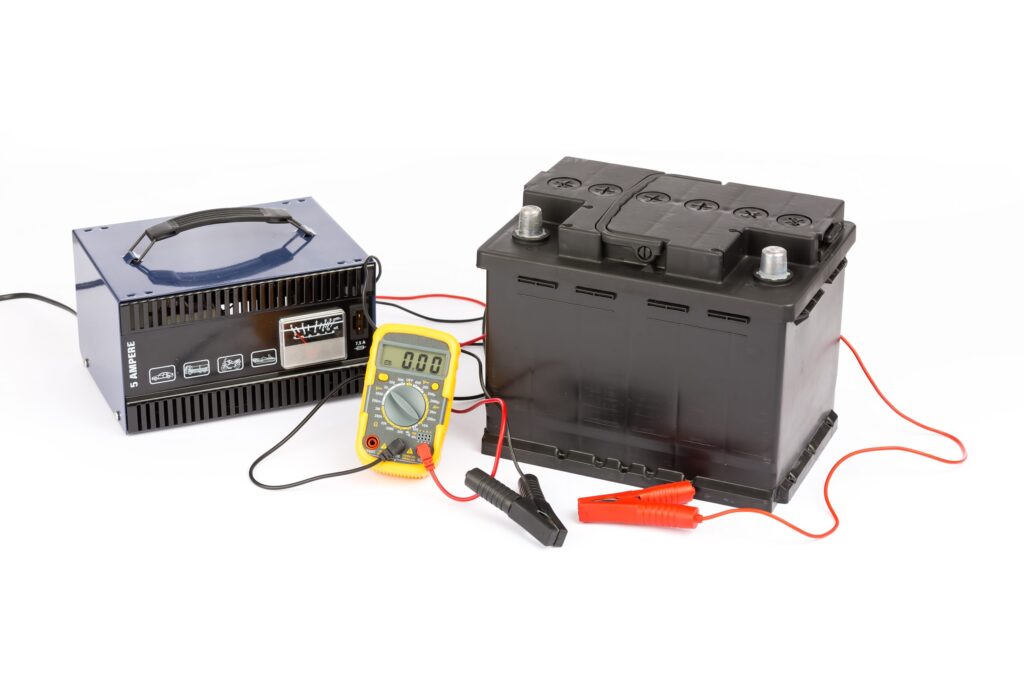
The charging current capacity should be appropriate for your battery size. A general rule is to use a charging current of 10-30% of the battery’s amp-hour capacity for regular charging. For example, a 100 amp-hour AGM battery would ideally be charged with a 10 to 30 amp charger. Lower charging rates are gentler on the battery and can extend its lifespan, while higher rates charge faster but generate more heat.
Optimal Charging Methods and Techniques
Understanding the proper charging sequence and methodology is crucial for maximizing AGM battery life and performance. The AGM battery charging process should follow a specific multi-stage approach that brings the battery to full charge without causing damage or excessive heat generation.
The bulk charging stage represents the first phase where the charger delivers maximum current at a constant rate until the battery reaches approximately 80% state of charge. During this stage, the battery voltage gradually rises from its rested voltage (typically around 12.7-12.8 volts for a fully charged battery) toward the absorption voltage setpoint. The bulk stage usually completes quickly and represents the most efficient charging period.
The absorption charging stage begins when the battery voltage reaches the preset absorption voltage (typically 14.4-14.8 volts). During absorption, the charger maintains constant voltage while the charging current gradually decreases as the battery approaches full charge. This stage is critical for fully charging the battery and typically lasts 2-4 hours depending on battery size and depth of discharge. Insufficient absorption time results in chronic undercharging, which leads to sulfation and reduced capacity over time.
The float charging stage maintains the battery at full charge once the absorption stage completes. The charger reduces voltage to the float level (typically 13.2-13.8 volts) and provides just enough current to compensate for self-discharge. Float charging can continue indefinitely without damaging the battery, making it ideal for standby applications and long-term storage situations.
Temperature Considerations and Environmental Factors
Temperature significantly impacts AGM battery charging efficiency, acceptance rate, and longevity. AGM batteries perform optimally at moderate temperatures between 50°F and 80°F (10°C to 27°C). Charging at extreme temperatures requires special considerations and voltage adjustments to prevent damage and ensure complete charging.
Cold temperature charging presents several challenges. When batteries are cold, their internal resistance increases, and their ability to accept charge decreases significantly. At 0°F (-18°C), an AGM battery may only accept 40-50% of its normal charging current. Charging a frozen battery can cause permanent damage including case cracking and internal plate damage. Always warm batteries to at least 32°F (0°C) before attempting to charge them, and ideally charge at room temperature for best results.
High temperature charging accelerates chemical reactions within the battery but also increases the risk of overcharging, excessive gassing, and thermal runaway. When charging in hot environments above 90°F (32°C), reduce the charging voltage using the temperature compensation factor mentioned earlier. Some advanced charging systems automatically reduce charging current in high-temperature situations to prevent excessive heat generation.
Proper ventilation during charging is important even though AGM batteries are sealed. While AGM batteries recombine most gases internally, some hydrogen gas can still be released through the pressure relief valves during charging, especially during overcharging situations. Charge batteries in well-ventilated areas and never charge them in completely sealed enclosures without adequate ventilation.
Suggested read: LiFePO4 Battery Charger: Expert Buying Insights and Performance Optimization
Common Charging Mistakes and How to Avoid Them
Many AGM battery failures result from improper charging practices rather than manufacturing defects or normal wear. Understanding and avoiding these common mistakes can significantly extend battery life and maintain optimal performance throughout the battery’s service life.
Chronic undercharging represents one of the most damaging practices for AGM batteries. When batteries are repeatedly charged to only 70-80% capacity without ever reaching full charge, sulfate crystals that form during discharge never fully convert back to active material. Over time, these crystals harden and become permanent, reducing battery capacity and performance. This condition, called sulfation, is irreversible once it becomes severe. To prevent undercharging, ensure your charging system provides adequate absorption time and voltage to fully charge the battery regularly.
Overcharging causes equally serious damage through different mechanisms. Excessive charging voltage or prolonged charging at high voltage causes electrolyte breakdown, generates excessive heat, and can cause the pressure relief valves to open and release gases. Once an AGM battery loses electrolyte, it cannot be refilled, and the loss is permanent. Overcharging also causes positive grid corrosion, which reduces battery life. Always use chargers with proper voltage regulation and automatic shutoff or float mode switching.
Using automotive alternators without proper voltage regulation can harm AGM batteries in vehicle applications. Many older alternators produce charging voltages of 14.8 to 15.0 volts or higher, which is excessive for AGM batteries during extended charging periods. Modern vehicles equipped with AGM batteries from the factory typically include smart alternator control systems that adjust voltage based on battery temperature and state of charge. When installing AGM batteries in older vehicles or those originally equipped with flooded batteries, consider upgrading to a smart alternator regulator designed for AGM batteries.
Charging AGM Batteries in Different Applications
Different applications place unique demands on AGM batteries and require tailored AGM battery charging approaches to maintain optimal performance. Understanding these application-specific requirements helps ensure your batteries receive appropriate charging treatment.
Automotive applications present unique charging challenges because the alternator provides the primary charging source during normal operation. When replacing a conventional flooded battery with an AGM battery in a vehicle, verify that the alternator voltage regulation is appropriate for AGM batteries. Many modern vehicles use battery sensors and smart alternator control to optimize charging. If your vehicle has a battery sensor, it may need to be reset or reprogrammed after installing a new AGM battery to ensure proper charging.
For vehicles with aftermarket accessories that draw power when the engine is off, or for vehicles that are driven infrequently, supplemental charging with an external charger may be necessary. Consider using a smart battery maintainer that can be left connected during storage periods to prevent deep discharge. Many automotive AGM batteries benefit from monthly maintenance charging if the vehicle sits unused for extended periods.
Marine applications require robust charging systems because boats often use house battery banks for extended periods without engine runtime. Marine AGM batteries should be charged using a multi-bank marine charger specifically designed for AGM batteries. These chargers typically include features like ignition protection for use in engine compartments and mounting options for harsh marine environments. The charging system should be sized to fully recharge the battery bank within a reasonable timeframe, typically 6-8 hours for deeply discharged batteries.
RV and recreational vehicle applications often combine AGM batteries with solar charging systems and shore power chargers. When using solar panels for AGM battery charging, ensure the solar charge controller has an AGM-specific charging profile or allows manual voltage adjustment. PWM (Pulse Width Modulation) controllers work adequately for small systems, but MPPT (Maximum Power Point Tracking) controllers offer better efficiency and are recommended for larger solar arrays. The solar system should be sized to provide adequate charging current to replenish the daily amp-hour usage.
Systems like the blue oval charge network demonstrate how modern electric vehicle infrastructure is evolving, though traditional AGM battery charging remains crucial for countless conventional vehicles and applications.
Maintenance Charging and Long-Term Storage
Proper maintenance during storage periods is critical for preserving AGM battery capacity and preventing permanent damage from self-discharge and sulfation. AGM batteries self-discharge at approximately 1-3% per month at room temperature, with higher rates at elevated temperatures. Without proper maintenance charging, a stored battery can discharge below safe levels within 3-6 months.
Suggested read: Battery Charging Scooter Explained: Best Charging Practices for Electric Scooters
Float charging provides the ideal maintenance charging method for long-term storage. A quality float charger maintains the battery at the appropriate float voltage (typically 13.2-13.5 volts for 12-volt AGM batteries) indefinitely without overcharging. This approach keeps the battery at full charge while minimizing grid corrosion and water loss. Float charging is commonly used for standby power applications, emergency lighting systems, and seasonal vehicles.
Periodic charging represents an alternative approach where the battery is charged every 2-3 months during storage rather than maintaining continuous connection to a charger. This method works well when float chargers are unavailable or when batteries are stored in locations without electrical access. When using periodic charging, check battery voltage monthly and recharge when voltage drops below 12.4 volts (approximately 75% state of charge). Never allow AGM batteries to discharge below 50% capacity (approximately 12.0 volts) during storage.
Temperature during storage significantly affects self-discharge rate and optimal maintenance charging approach. Store batteries in cool, dry locations when possible. At 77°F (25°C), an AGM battery self-discharges at the normal rate of 1-3% per month. At 95°F (35°C), self-discharge increases to approximately 5-8% per month. At 50°F (10°C), self-discharge decreases to less than 1% per month. Cool storage temperatures extend battery life but don’t eliminate the need for maintenance charging.
Monitoring Battery Health and Charging Effectiveness
Regular monitoring of battery condition helps identify charging system problems early and prevents premature battery failure. Several methods can assess AGM battery health and determine whether your AGM battery charging practices are adequate.
Voltage testing provides a quick indication of battery state of charge but must be performed correctly for accurate results. Always measure battery voltage after the battery has rested for at least 2-4 hours without charging or discharging to get an accurate open-circuit voltage reading. For a 12-volt AGM battery, voltage readings correlate approximately to these state of charge levels:
| Battery Voltage | State of Charge | Battery Condition |
|---|---|---|
| 12.8-13.0V | 100% | Fully Charged |
| 12.6V | 90% | Good Charge |
| 12.4V | 75% | Should Recharge Soon |
| 12.2V | 50% | Recharge Now |
| 12.0V | 25% | Deeply Discharged |
| 11.8V or below | 0-10% | Critical – Damage Likely |
Load testing provides more comprehensive information about battery condition and capacity. A load tester applies a high-current discharge (typically 50% of the CCA rating for 15 seconds) while monitoring battery voltage. A healthy AGM battery should maintain voltage above 9.6 volts during this test at room temperature. Batteries that fail load testing may have internal damage, sulfation, or capacity loss even if they show proper open-circuit voltage.
Capacity testing determines whether the battery can still deliver its rated amp-hour capacity. This test involves fully charging the battery, then discharging it at a controlled rate (typically the 20-hour rate) until it reaches the discharge cutoff voltage (typically 10.5 volts). Measure the total amp-hours delivered during discharge. A healthy battery should deliver at least 80% of its rated capacity. Batteries delivering less than 80% capacity are nearing end of life and should be replaced soon.
Advanced Charging Technologies and Features
Modern battery charging technology has evolved significantly, offering advanced features that optimize AGM battery charging and extend battery lifespan. Understanding these technologies helps you select the best charging equipment and configure systems for optimal results.
Pulse charging technology uses short, high-frequency voltage pulses during the charging process. Proponents claim this approach reduces sulfation, improves charging efficiency, and extends battery life compared to conventional DC charging. Some pulse chargers include desulfation modes that use specific pulse patterns designed to break down sulfate crystals. While research on pulse charging effectiveness shows mixed results, many users report positive experiences with pulse chargers for recovering neglected batteries.
Temperature-compensated charging automatically adjusts charging voltage based on battery temperature. This feature is essential for batteries operated in varying temperature environments or extreme climates. Temperature sensors can be mounted directly on the battery terminal or case for accurate temperature measurement. Quality temperature-compensated chargers adjust voltage at the standard rate of -5mV/°C per cell (-30mV/°C for a 12V battery), ensuring optimal charging regardless of ambient temperature.
Remote monitoring and control capabilities allow users to monitor charging status, battery voltage, current flow, and other parameters via smartphone apps or web interfaces. These systems are particularly valuable for marine, RV, and solar applications where batteries may be in difficult-to-access locations. Remote monitoring helps identify charging system problems quickly and allows users to verify that charging completes successfully without physically checking battery voltage.
Suggested read: EV Charging Adapters: Your Essential Buying Guide for Compatible Electric Vehicle Charging in 2025
Safety Precautions and Best Practices
Safe handling and charging practices protect both users and batteries from harm. While AGM batteries are generally safer than flooded batteries due to their sealed construction, they still require proper handling and charging procedures to prevent accidents and damage.
Always wear safety glasses and gloves when working with batteries, even sealed AGM batteries. Battery terminals can cause electrical burns or sparks if accidentally short-circuited. Remove jewelry, watches, and other metal objects before working with batteries. Ensure charging area has adequate ventilation even though AGM batteries produce minimal gas under normal conditions.
Proper polarity connection is critical. Always connect the positive (+) charger lead to the positive battery terminal and the negative (-) lead to the negative terminal. Reverse polarity connection can cause sparks, damage the battery and charger, or even cause battery explosion in severe cases. Most quality chargers include reverse polarity protection, but never rely solely on this feature.
Avoid charging damaged batteries. Inspect batteries before charging for signs of damage including cracks, bulging, leaking, or broken terminals. Damaged batteries should not be charged and should be properly recycled. A severely damaged battery can rupture, leak, or even explode during charging.
Frequently Asked Questions About AGM Battery Charging
What is the best voltage to charge an AGM battery?
The optimal charging voltage for a 12V AGM battery ranges from 14.4 to 14.8 volts during the bulk and absorption charging stages, with a float voltage of 13.2 to 13.8 volts for maintenance. Always consult your specific battery manufacturer’s specifications as requirements can vary between different AGM battery designs and models.
Can I use a regular battery charger on an AGM battery?
Using a regular charger designed for flooded batteries is not recommended for AGM battery charging. Regular chargers often apply higher voltages and may include equalization modes that can damage AGM batteries. Always use a charger with an AGM-specific setting or one that allows manual voltage adjustment to AGM-appropriate levels.
How long does it take to fully charge an AGM battery?
Charging time depends on battery capacity, depth of discharge, and charging current. A deeply discharged 100Ah AGM battery charged with a 10-amp charger typically requires 12-16 hours for complete charging including the absorption phase. Higher charging currents reduce charging time but generate more heat. Always allow adequate absorption time for full charging.
Do AGM batteries require a special charger?
Suggested read: Instant Power Battery Charger: Everything You Need to Know About Portable Jump Starters and Emergency Charging Solutions
Yes, AGM batteries perform best with chargers specifically designed for AGM technology or chargers with selectable AGM charging profiles. These chargers provide appropriate voltage levels, multi-stage charging algorithms, and often include temperature compensation features that optimize agm battery charging performance and longevity.
Can I overcharge an AGM battery?
Yes, overcharging damages AGM batteries by causing excessive heat generation, electrolyte breakdown, and pressure buildup. Overcharging can lead to bulging, case damage, and permanent capacity loss. Always use chargers with automatic shutoff or float mode switching to prevent overcharging.
What happens if I charge an AGM battery with too high voltage?
Charging with excessive voltage causes rapid electrolyte breakdown, generates excessive heat and gas, and can cause the pressure relief valves to open. Once electrolyte is lost through the valves, it cannot be replaced, resulting in permanent capacity reduction. Repeated high-voltage charging significantly shortens battery life.
How do I know when my AGM battery is fully charged?
A fully charged 12V AGM battery should measure approximately 12.8-13.0 volts after resting for 2-4 hours. During charging, the battery is fully charged when it reaches the absorption voltage and the charging current drops to near zero (typically less than 2-3% of the battery’s amp-hour capacity).
Can AGM batteries freeze?
AGM batteries can freeze when deeply discharged. A fully charged AGM battery can withstand temperatures as low as -40°F (-40°C) without freezing, but a fully discharged battery may freeze at 32°F (0°C). Always maintain AGM batteries in a charged state during cold weather and never attempt to charge a frozen battery.
Essential Resources and Further Reading
For detailed technical specifications and charging recommendations specific to your battery model, consult the manufacturer’s documentation. Leading AGM battery manufacturers including Optima, Odyssey, VMAXX, and Lifeline provide comprehensive charging guidelines and technical support resources.
According to research published by the Battery University, proper charging voltage and temperature compensation are the most critical factors affecting AGM battery longevity. Their studies demonstrate that batteries charged with inappropriate voltage settings experience up to 50% reduction in cycle life compared to properly charged batteries.
Suggested read: 48 Volt Charger: Everything You Need to Know About Selecting and Using High-Performance Battery Charging Solutions
The Society of Automotive Engineers (SAE) publishes standards and technical papers addressing proper battery charging practices for various applications. Their technical resources provide engineering-level detail on charging algorithms, temperature compensation factors, and performance testing procedures.
For solar applications, the North American Board of Certified Energy Practitioners (NABCEP) offers training and certification programs covering proper battery charging system design and installation practices.
Ready to optimize your battery performance? Invest in a quality AGM-specific charger today and implement proper agm battery charging practices to maximize your battery’s lifespan and ensure reliable power when you need it most. Whether you’re maintaining automotive batteries, marine house banks, or backup power systems, following these proven charging methods protects your investment and delivers years of dependable service.
Take action now: Review your current charging setup against these guidelines, verify your charger settings are appropriate for AGM batteries, and establish a regular maintenance charging schedule to keep your batteries performing at their peak.
Article Sources and Citations:
- Battery University. (2024). “Charging Lead Acid Batteries.” Available at: https://batteryuniversity.com/
- Society of Automotive Engineers (SAE). “Battery Charging Systems Standards.” Available at: https://www.sae.org/
- Absorbed Glass Mat Battery Manufacturers’ Technical Specifications and Charging Guidelines
- North American Board of Certified Energy Practitioners (NABCEP). “Battery-Based PV System Installation Best Practices.” Available at: https://www.nabcep.org/